
It’s the Most Wonderful Time of the Year. Performance Review Season!
🎶 It’s the most wonderful time of the year! 🎶
You know that time of year when everyone is excited and full of anticipation. Managers and employees alike are counting down the days.
It’s Annual Performance Review Time!
Wait. You’re not excited? It’s not the most wonderful time of the year?
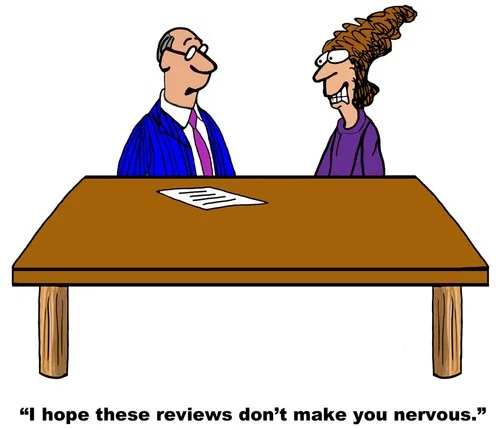
For many managers, annual performance reviews mean:
Trying to remember what employees accomplished months ago.
Searching through emails and notes for specific examples.
Figuring out how to word feedback without offending someone, creating misunderstandings, or crossing an HR boundary.
Completing forms that seem to get longer every year.
Wondering whether the employee will agree with their assessment.
And what about your employees?
They’re wondering what you’re going to say, whether there will be surprises, and what the review might mean for their future.
For some employees, performance reviews can become very personal. What you intend as constructive feedback about their performance may be interpreted as a judgment about them as a person.
That’s a lot of stress and anxiety for everyone involved.
But does it have to be this way?
The Problem Isn’t Necessarily the Performance Review
Your organization may conduct performance reviews annually, quarterly, or according to its fiscal year. Some organizations have moved away from formal ratings altogether.
Whatever your process looks like, there’s one thing you can control: how you communicate with your employees about their performance throughout the year.
Too often, managers treat performance reviews as an event rather than part of an ongoing conversation.
Feedback gets saved for the formal review. Development conversations get postponed. Accomplishments are forgotten, and performance issues that should have been addressed months ago suddenly become part of an annual evaluation.
By the time the review arrives, you’re trying to reconstruct an entire year of performance, and your employee may be hearing feedback for the first time.
Your annual performance review shouldn’t be the first time an employee hears how they’re performing.
What If Your Annual Review Was Just a Summary?
Imagine sitting down to prepare your annual performance reviews and realizing that most of the work is already done.
You don’t have to remember what happened in February or search through six months of emails looking for examples.
You already know what your employees have accomplished, where they’ve struggled, and what they’ve been working on to improve.
And here’s the best part: Your employees know, too.
How?
Because you’ve been having regular conversations about their performance throughout the year.
Here’s a simple approach I’ve recommended and used for years.
Schedule 30 minutes each month with every employee to talk about their performance and development.
It doesn’t have to be formal. Grab a cup of coffee, find a comfortable place to talk, and have a conversation. If you’re working remotely, turn on your cameras and make it a relaxed discussion rather than another formal meeting.
You don’t need a complicated form or an elaborate agenda.
And if you’re already conducting regular one-on-ones, you don’t necessarily need another meeting. Dedicate one of those conversations each month to discussing performance and development.
The goal is to create an opportunity for both of you to reflect on what’s working, what could be better, and what comes next.
All you need are five questions.
Five Questions to Ask Your Employee That Make Performance Reviews Easier
1. What’s gone well since we last met?
Start with the positives.
What has your employee accomplished? What worked particularly well? What are they proud of?
Give them an opportunity to recognize their own successes rather than immediately telling them what you think.
You may discover accomplishments you weren’t aware of or learn how they approached a challenging situation.
This is also your opportunity to recognize progress and reinforce behaviors you’d like to see continue.
2. What would you do differently next time, if anything?
Here’s where the coaching begins.
Instead of immediately telling someone what they should have done, ask them to reflect on their own performance.
What challenges did they encounter? What might they do differently next time? What did they learn?
You may be surprised by how often employees recognize their own opportunities for improvement.
Of course, that doesn’t mean you shouldn’t provide feedback. If there’s a performance issue they haven’t identified, it’s your responsibility to address it.
The difference is that you’re creating a two-way conversation rather than simply delivering your assessment.
3. What skill would you like to work on before we meet again?
Development doesn’t always mean attending another training program or earning a certification.
Sometimes it’s about understanding another part of the organization, building relationships, or seeing how your work connects with someone else’s.
For example, your employee might:
Sit in on a training session outside their department to learn more about another part of the business.
Meet with a project manager to see how their work connects to yours.
Attend a local professional conference to explore new ideas and make connections.
Spend time shadowing someone in another department.
Take on a small assignment that allows them to practice a new skill.
It doesn’t have to be complicated or expensive.
And it’s perfectly acceptable to continue working on the same skill for several months. Not everything can be learned or mastered in 30 days.
The goal is to identify one meaningful opportunity for growth and make progress toward it.
4. What could I have done to support you better?
This may be one of the most important questions you ask.
Performance isn’t just about what your employee does. You have responsibilities, too.
Were your expectations clear? Did they have the resources they needed? Was there an obstacle you could have helped remove?
Asking this question shows that you’re willing to examine your own performance as a manager.
It also creates an opportunity for your employee to share something they might otherwise hesitate to bring up.
You may not always like the answer, but that’s part of being an effective manager.
And remember, if you agree to do something differently, follow through.
5. What else should I have asked you?
I love this question.
It’s simple, but it can open the door to an entirely different conversation.
Maybe there’s something your employee wanted to discuss but didn’t know how to bring up. Perhaps there’s an accomplishment you overlooked or a challenge you weren’t aware of.
Sometimes the most valuable part of a conversation comes after you think you’ve asked all the questions.
Give them the opportunity.
And then listen.
Keep It a Conversation, Not Another Form
Before you start scheduling meetings, a few things to keep in mind.
These five questions aren’t meant to become another performance review form.
They’re conversation starters.
If you use them every month, they may start to feel repetitive. That’s okay. Change the wording, mix up the order, or use language that fits your organization’s culture.
You don’t even have to ask all five questions every time.
What matters is the direction of the conversation.
“Don’t confuse informal with unimportant.”
Keep it comfortable and informal, but don’t confuse informal with unimportant.
Listen more than you talk. Give your employee time to think before jumping in with your observations or suggestions.
And take a few notes.
Nothing elaborate. Capture accomplishments, challenges, development goals, and any commitments either of you made.
Encourage your employee to do the same.
One other important point: Don’t save feedback that needs immediate attention for these monthly conversations.
If there’s a performance problem, address it when it happens. If someone does something particularly well, recognize it when it happens.
These conversations are an opportunity to reflect on performance and development, not a reason to delay feedback.
When Annual Review Time Arrives
Now imagine it’s time to complete those annual performance reviews.
Instead of starting with a blank form and trying to remember everything that happened during the year, you have months of conversations to draw from.
You have notes about accomplishments, challenges, development activities, and progress.
Your employees have their notes, too.
Before you prepare the formal review, ask them to look back over their notes and identify their accomplishments, challenges, and areas of growth.
They may remember something you’ve forgotten or highlight a contribution you didn’t realize was significant.
Now you’re both participating in the process.
You’ll still need to complete whatever documentation your organization requires. There may be ratings to assign, goals to evaluate, or other requirements to address.
But much of the preparation has already been done.
More importantly, your employee shouldn’t be surprised by what you have to say.
You’ve been discussing their performance throughout the year.
You’ve celebrated accomplishments, addressed challenges, and worked together on development.
The annual review becomes a summary of those conversations rather than an announcement of information they’ve never heard before.
And that makes the process easier for everyone.
Make the Next Review Season Different
You don’t have to wait until next year to get started.
Schedule 30 minutes with each of your employees this month.
Grab a cup of coffee. Find a comfortable place to talk. Ask a few questions and, most importantly, listen.
Then do it again next month.
It doesn’t have to be complicated, and it doesn’t have to take hours of preparation.
A little time invested throughout the year can save you a lot of time and frustration when formal reviews are due.
And you might discover that these conversations do more than make annual reviews easier.
They help you build stronger relationships, develop your employees, and become a more effective manager.
Who knows? Maybe next year, when performance review season rolls around, you’ll actually have a reason to sing.
🎶 It’s the most wonderful time of the year! 🎶
Your Turn
Reflect: Think about your last round of performance reviews. How much of what you discussed had already been addressed with your employees?
Assess: How regularly are you having meaningful conversations about performance and development? Are they happening throughout the year or primarily when reviews are due?
Engage: Schedule a 30-minute performance conversation with one employee this month. Use the five questions as your guide, capture a few notes, and make a commitment to follow up next month.
