
We all have that one person we can count on. Your right hand, unless you're left-handed; then they're your left hand (we're for full inclusion). You know who they are. Your team knows who they are. And while we shouldn't have favorites, you have that one person who will always be there to support you.
It starts out innocently enough. They are a team smart, dedicated, loyal, and always there for you. At first, you see them as someone you can develop. After all, that's what leadership is all about, isn't it? Developing people, helping them grow, and preparing them for new opportunities.
But what happens when you're relying on them too much? Would you recognize the signs? They may not say anything to you directly, and they may keep saying yes to every request. But they could be reaching overwhelm, burnout, or even quiet quitting. Worse yet, they may be quietly looking for a new role or a new job.
What started as an opportunity to develop a talented employee may have turned into something entirely different.
The Reliability Trap: When Good Work Leads to More Work
Here's the thing. Nobody sets out to overload their best person. It happens one reasonable decision at a time.
An important assignment comes along. It matters, the deadline is tight, and it has to be done
right. So you give it to your most reliable employee. Of course you do.
They deliver excellent results. You're pleased, and they're happy to have earned your trust. Everybody wins.
Then another important assignment comes along. Naturally, you turn to them again. Why wouldn't you? They've already proven they can handle it.
And then another. And another.
Before long, they're your first choice for almost everything. Not because you planned it that way, but because it works. Eventually, they have more on their plate than anyone could reasonably manage.
And you?
You're delighted. You have someone you can depend on, the work is getting done, and it's one less thing to worry about. Honestly, it feels like good management.
Meanwhile, they start to wonder how exactly they ended up with so much responsibility.
The reward for doing great work shouldn't automatically be more work.
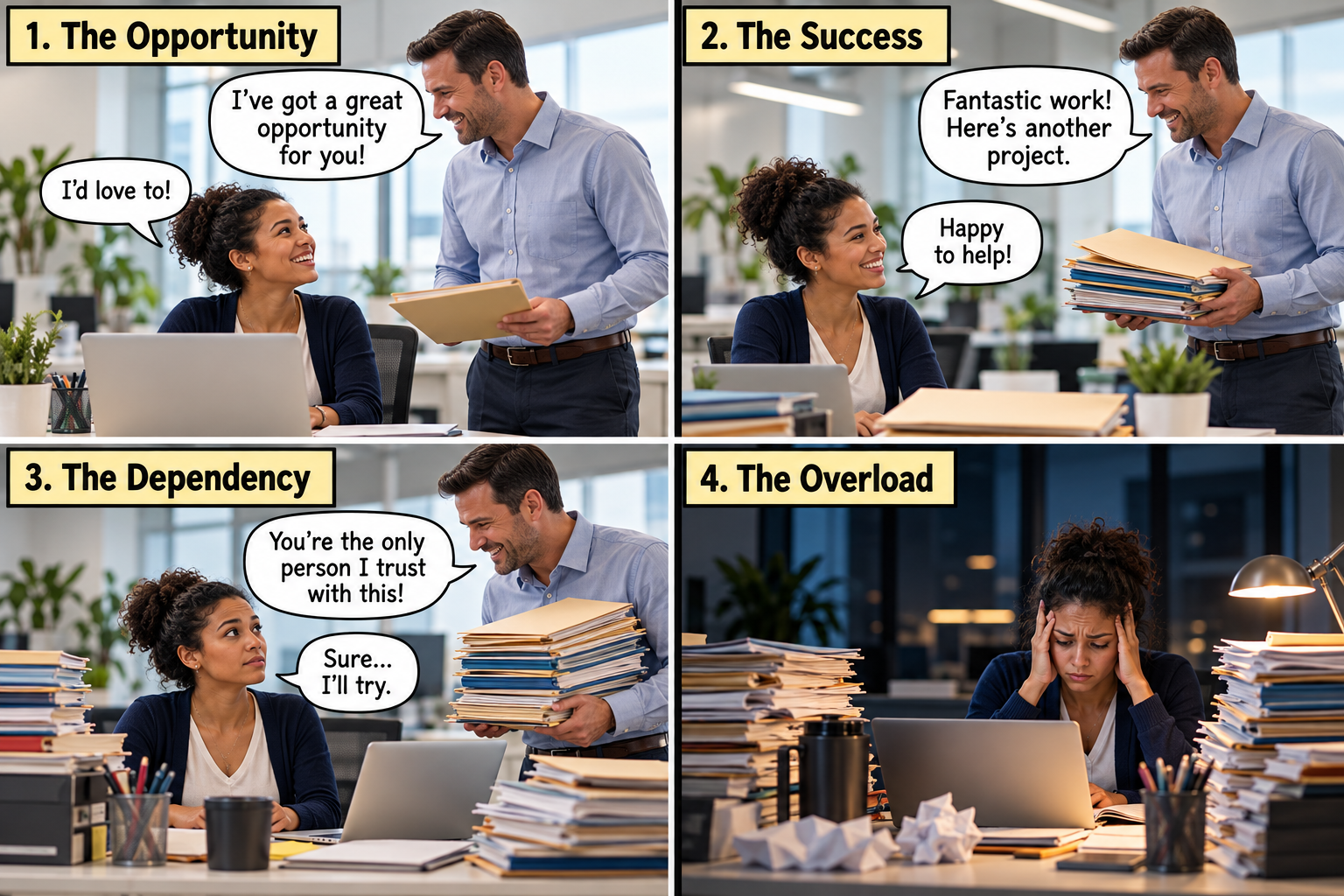
Illustration: AI-generated using ChatGPT
So it's worth asking yourself: Are you giving this employee opportunities to grow, or are you giving them work because you know they'll get it done?
The Warning Signs: Are You Paying Attention?
The tricky part is that the early signs don't look like problems. They look like commitment.
They start arriving a little earlier and staying a little later. They work through lunch. They take work home. They always seem busy and have less time for their colleagues. If you notice at all, you probably think, "Wow, they're really dedicated." You might even mention it in their review.
But over time, something changes. The enthusiasm starts to fade. The person who used to jump at new projects stops volunteering. They get quieter in meetings. There's a little impatience, a little frustration that wasn't there before. They start wondering whether anyone actually notices what they're contributing. And eventually, someone hears them say it:
"I might as well be the manager. I'm already doing their job."
Ouch.
Then the relationship with you starts to change. They stop bringing you ideas. Conversations become more transactional. They still say yes, but it's a different kind of yes. "Absolutely, I'm on it" becomes a flat "Sure." And you may realize they're not stopping by your office the way they used to.
Through all of this, the work keeps getting done, which is exactly why it's so easy to miss.
Just because someone continues to deliver doesn't mean everything is fine.
And here's the catch: your best employee may be the last person to tell you they're overwhelmed. They've built their reputation on being dependable. Admitting they're struggling may feel like letting you down.
Which means you can't wait for them to bring it up. You have to start the conversation.
Development or Dependency? There's a Difference.
Let's go back to where this started. You had good intentions. You wanted to develop this person.
And maybe, at first, you did.
But from the manager's chair, development and dependency might look an awful lot alike.
Development is about them. It means giving them challenging assignments that fit their goals, helping them learn new skills, offering coaching and feedback along the way, and preparing them for what's next.
“The reward for doing great work shouldn’t automatically be more work. ”
Dependency is about you. It's assigning work because they're the fastest or the most reliable. It's continually adding responsibilities without ever taking anything off their plate. It's assuming they want more because they never say no. And sometimes, it's relying on them to handle problems you should be addressing yourself. (There's a word for that last one, and it isn't delegation. It's dumping.)
Here's a question that cuts right through it:
If this employee told you tomorrow that they wanted to move into another role, would you be excited for them, or worried about how you'd get the work done?
If your first feeling was a small knot in your stomach, that's worth paying attention to.
The Domino Effect: What About the Rest of Your Team?
It doesn't stop with your go-to person. While you've been leaning on one employee, what's been happening with everyone else?
Your high performer may be starting to resent their colleagues. Why am I staying until seven while everyone else leaves at five?
Your other employees may feel overlooked or undervalued. Why does the manager always give the important assignments to the same person?
And you may not see the imbalance at all until your high performer checks out or walks out.
Then you have another problem. You've depended on one person for so long that the rest of your team hasn't had the chance to develop the skills to step up.
When you consistently rely on one person, you risk overburdening your strongest employee while underdeveloping everyone else.
Breaking the Cycle: Have the Conversation Before It's Too Late
The good news? This is fixable. And it usually starts with a conversation.
Last week, we talked about why monthly performance conversations beat waiting for the annual review. Here's another reason those conversations matter: they give you a chance to recognize problems before they turn into performance problems or a resignation letter.
But there's a catch. You have to ask the right questions. If your monthly check-in is a quick run-through of what got done and what's coming next, you're missing the bigger picture.
Try asking:
How are you feeling about your current workload?
What are you spending time on that we should reconsider?
Are your assignments helping you develop in the direction you want to go?
How can I help support you?
And perhaps most importantly:
What am I asking you to do that I should stop asking you to do?
That last one takes a little courage. It also puts the accountability right where it belongs on you.
Next, take a hard look at how you distribute work. Before the next project automatically lands on your usual person's desk, pause. Who else could benefit from this assignment? What would it take to prepare someone else to handle it? And, if you're being honest, are you choosing this employee because it's best for their development, or because it's easiest for you?
Spreading the work around will take more coaching, more patience, and more follow-up. It's slower, at least at first. But that's part of leadership.
Finally, remember that your high performers need you too. Managers often spend most of their coaching time on the employees who are struggling, while the strong performers get… more assignments. But your best people need coaching, feedback, recognition, and support just as much as anyone else.
Being a high performer doesn't mean being self-sufficient.
Your Turn: Reflect, Assess, Engage
Reflect: Think about the person you rely on most. How has their workload changed over the past several months? Are you providing development opportunities, or simply assigning more work?
Assess: Have there been changes in their behavior, attitude, and engagement. Are they working longer hours? Have they become less enthusiastic? When was the last time you had a meaningful conversation about their workload and career goals?
Engage: Set up a conversation with that employee. Ask how they're managing their responsibilities, what support they need, and whether their current assignments line up with their development goals. Then identify one opportunity to distribute work more effectively across the team.
Don't Let Reliability Become a Liability
You started with an employee you could count on. Someone dedicated, capable, and eager to contribute. You recognized their potential and wanted to help them grow.
But somewhere along the way, you may have stopped developing them and started depending on them.
And unless you recognize what's happening, you could lose the very person you've come to rely on most.
Your best employees deserve opportunities to grow, not an endless supply of additional work. And the rest of your team deserves opportunities to grow, too.
So the next time you're about to hand another assignment to your go-to person, ask yourself:
Am I doing this because it's the best opportunity for them, or because it's the easiest decision for me?
